 Handmade Heaven
How to wash a wool sweater — by hand and in the machine (step by step)
· The Handmade Heaven workshop
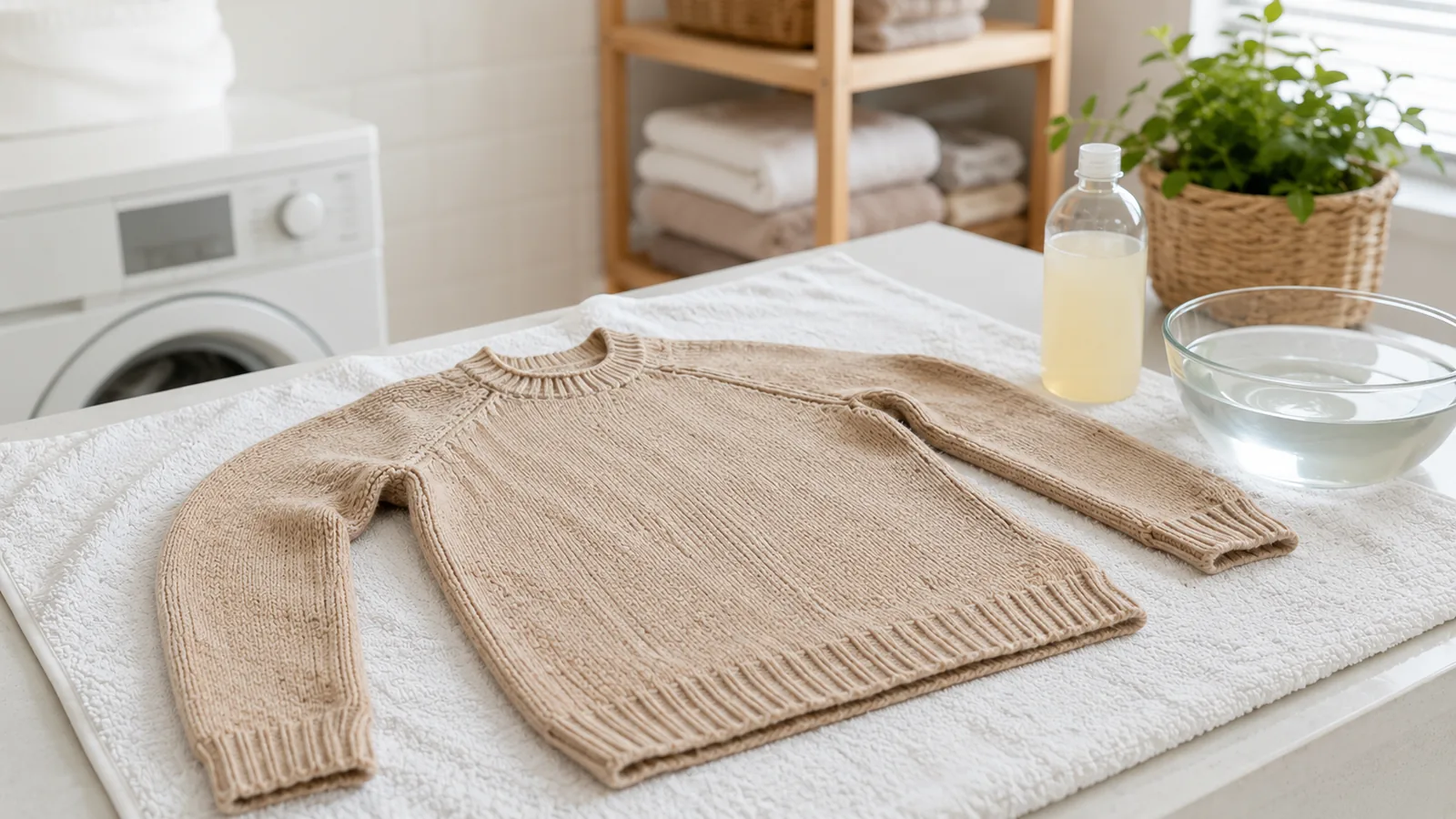
A well-cared-for sweater in real wool lasts for years — a badly washed one can felt after a single wash. Here are the tried-and-tested rules we follow in our own workshop.
Rule number one: wash as rarely as possible
Wool is naturally antibacterial and doesn’t hold odours the way cotton or acrylic does. In most cases, instead of washing, it’s enough to air the sweater out overnight on a balcony or by an open window. Merino and alpaca sweaters usually need washing once a season, or when visibly soiled.
Hand washing — the safest method
- Fill a basin with lukewarm water (max. 30°C) — hot water felts wool.
- Add a wool detergent (with lanolin) — never ordinary washing powder, as the enzymes in powders damage protein fibres.
- Submerge the sweater and press it gently. Don’t rub, don’t wring, don’t stretch.
- Rinse in water at the same temperature — thermal shock also causes felting.
- Press the water out by rolling the sweater in a dry towel.
Machine washing — the “wool” cycle only
If your machine has a wool/handwash cycle (max. 600 rpm, 30°C), you can use it:
- put the sweater in a laundry bag or a pillowcase,
- use wool detergent, skip regular detergent and fabric softener,
- switch off the extra spin.
Drying — always flat
Wet wool is heavy and stretches under its own weight, so never dry a sweater on a hanger or a line. Lay it out on a dry towel on a flat surface, shape it back to its proper form and let it dry away from radiators and direct sun. Drying takes 1–2 days — it’s worth turning the sweater over once.
How to wash a sweater — by fibre type
How to wash a merino wool sweater
Merino is fine and delicate, but it handles the machine’s “wool” cycle well (30°C, no spin). Many merino yarns have a superwash finish — check the label; if it’s there, machine washing is safe. We knit our sweaters from non-superwash merino, so we recommend hand washing.
How to wash an alpaca sweater
Wash alpaca by hand only, and as rarely as possible. The fibre contains no lanolin and is less elastic than merino — in a machine it easily loses its shape. After washing, be sure to shape it flat back to its proper dimensions.
How to wash a sheep’s wool sweater
Traditional sheep’s wool is the toughest, but it also felts most easily with temperature changes. Wash by hand in lukewarm water and rinse in water at exactly the same temperature. The good news: thanks to the lanolin, sheep’s wool sweaters usually only need airing out.
And what about an acrylic sweater?
Acrylic is a synthetic fibre — you can machine wash it at 30–40°C with no risk of felting. It has a different weakness instead: it pills and builds up static, and dried on a radiator it permanently loses its shape. If your “wool” high-street sweater reads 80% acrylic on the label, wash it in a laundry bag, inside out and never tumble-dry it. And when you’re tired of replacing sweaters every season — see how a sweater in 100% natural wool is different.
What never to do
- ❌ washing above 30°C
- ❌ regular washing powder and bleach
- ❌ wringing and hard spinning
- ❌ tumble drying
- ❌ drying on a radiator or in full sun
What if the sweater has already felted?
Slightly felted wool can sometimes be rescued by soaking the sweater in lukewarm water with hair conditioner or a lanolin wash and gently stretching the fibres. A heavily felted sweater unfortunately can’t be reversed — which is why prevention matters so much.
Questions about caring for a specific type of wool? Write to us — we’ll be happy to advise. And if you’re looking for a sweater that will outlive decades, take a look at our hand-knitted sweaters in natural wool.